

The Spiky Profile
Why Neurodivergence Doesn’t Fit the Curve

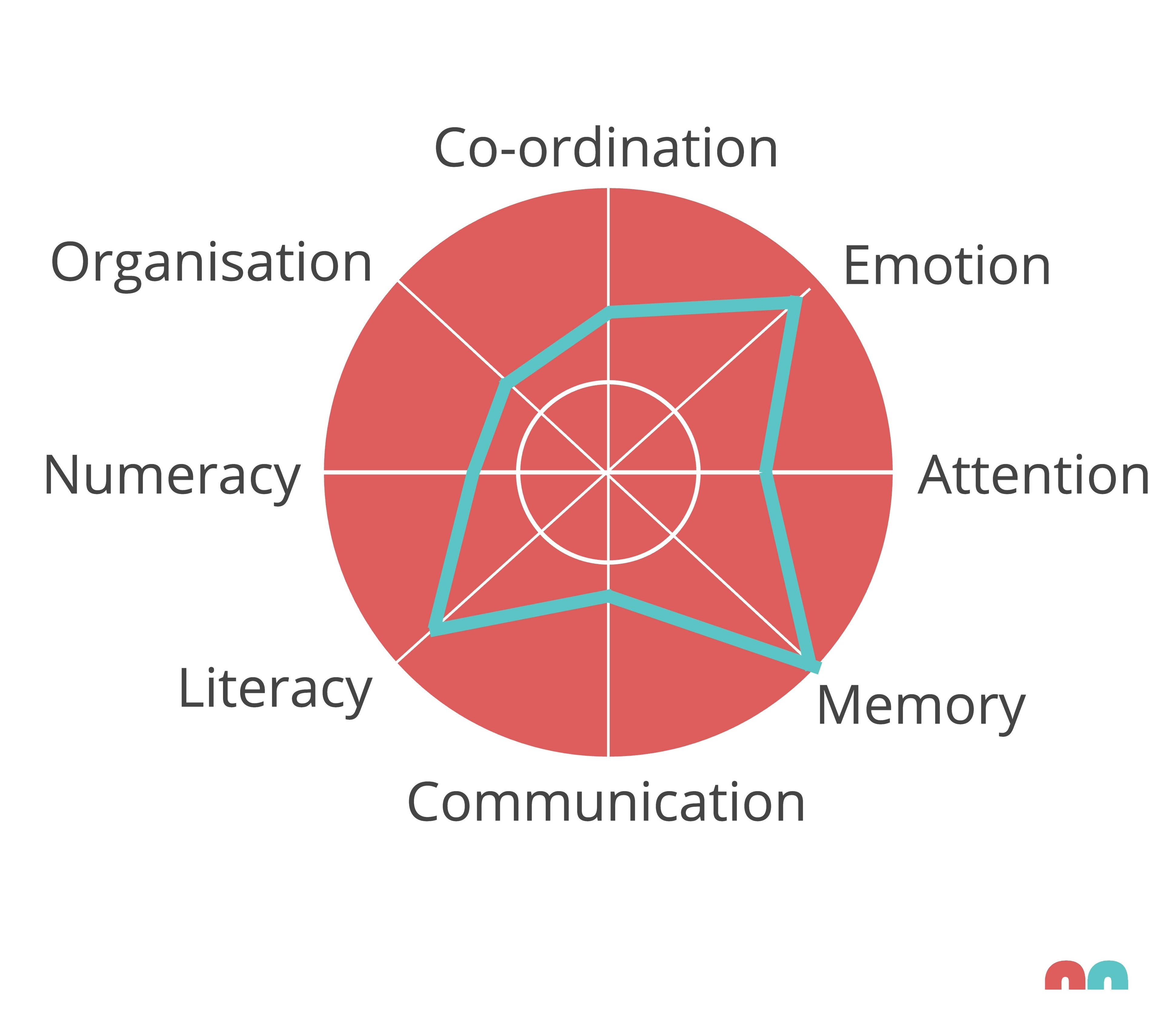
Neurodiversity is not a flaw to correct but a fundamental aspect of human cognition—a difference to understand, value, and support. It represents the many ways individuals think, feel, and interact with the world, shaping their experiences in unique ways. At the heart of this perspective lies the spiky profile, a concept that captures the uneven distribution of abilities commonly seen in neurodivergent individuals.
Rather than presenting as a smooth, linear range of competencies, a spiky profile reflects peaks and valleys across different skill areas. Someone may excel in complex problem-solving while struggling with executive function, or demonstrate exceptional creativity alongside difficulties in time management. In contrast to the more even cognitive distribution seen in neurotypical individuals, this variability is a defining feature of neurodivergence.
Why the Spiky Profile Matters
Traditional models of ability often fall short in capturing the complexity of neurodivergent experiences. The spiky profile offers a more accurate framework, shifting the focus away from deficit-based thinking and towards a strengths-based, self-affirming approach.
Key Benefits of Recognizing a Spiky Profile
Cultivating Self-Acceptance
Understanding cognitive diversity fosters self-acceptance by emphasising abilities rather than limitations. Instead of viewing differences as deficits, individuals can recognise their strengths and embrace a more holistic self-concept.
Enhancing Self-Efficacy
Identifying personal strengths and strategising for areas of difficulty increases confidence and resilience. Rather than attempting to "fix" perceived weaknesses, individuals can develop tools to navigate their challenges.
Improving Support & Accommodations
Acknowledging that no two spiky profiles are identical enables adjustments that amplify strengths while providing necessary support for specific challenges.
Mapping a Neurodivergent Profile
A neurodivergent profile often includes variations across multiple cognitive and functional domains:
Emotion & Regulation
Numeracy & Logical Reasoning
Organization & Time Management
Memory, Sensory Processing, & Attention
Speaking, Listening, & Comprehension
Literacy & Written Communication
Physical Coordination & Motor Skills
Some individuals exhibit exceptional strengths, such as hyperfocus, strong problem-solving skills, or advanced visual-spatial reasoning. Others may experience executive function challenges, such as difficulties with organisation, time management, or emotional regulation. Recognising this variability is essential in fostering confidence, enabling individuals to advocate for accommodations that support their needs while maximising their potential.
Self-Acceptance & Growth
Self-acceptance is a paradoxical process—it involves embracing oneself as you are, right now, with both strengths and struggles. However, many neurodivergent individuals face additional emotional strain due to environments shaped by social bias and misunderstanding. A spiky profile approach can help in cultivating self-acceptance through:
Embracing Strengths & Weaknesses
Recognising both high and low points without constant comparison or pressure to conform.
Challenging Negative Thought Patterns
Identifying and reframing distorted thinking to foster a realistic and balanced self-view.
Accepting Difficult Emotions
Understanding that frustration, self-doubt, and struggle are natural parts of growth.
By shifting away from traditional, deficit-focused models of ability, the spiky profile perspective provides a framework for increased self-efficacy, improved self-esteem, and greater confidence in seeking support. Recognising and embracing cognitive diversity allows neurodivergent individuals to step into their strengths, rather than feeling pressured to smooth out their spikes.